Music Video Symbolism
HALAZIA- ATEEZ
HALAZIA is symbolized as a light-force, reflection of identity, and summoning courage. The position the song shows mythical imagery, political rebellion, emotional vulnerability, and spiritual longing. It’s symbolism speaks on modern exhaustion, but refuses to surrender.
Era Comparisons
K‑Pop Music Eras Compared (1st → 5th Gen)
1) 1st Generation (1996–2003): Foundations & Idol System
- Sound: Teen‑pop, bubblegum melodies, simple production.
- Concepts: School uniforms, innocent imagery, color‑coded members.
- Industry Shift: The “idol system” emerges; synchronized choreography becomes standard.
- Representative Groups: H.O.T, S.E.S, Fin.K.L, Shinhwa.
Why it matters: This era established the template for K‑pop as a managed, concept‑driven industry.
2) 2nd Generation (2003–2012): Hallyu Wave & Digital Expansion
- Sound: More diverse—electro‑pop, R&B, hip‑hop, higher production quality.
- Concepts: Mature themes, early “girl crush,” fashion‑forward styling.
- Industry Shift: YouTube becomes a global distribution channel; fandoms organize online.
- Representative Groups: Girls’ Generation, BIGBANG, TVXQ, 2NE1, SHINee.
Why it matters: K‑pop becomes a regional and then global export, powered by digital media.
3) 3rd Generation (2012–2017): Global Breakthrough
- Sound: Global pop, EDM drops, hip‑hop fusion, tropical house.
- Concepts: Cinematic storytelling, lore‑driven albums, high‑budget MVs.
- Industry Shift: Social media fandoms (Twitter armies), mass streaming, Billboard charting.
- Representative Groups: BTS, BLACKPINK, EXO, TWICE, Red Velvet.
Why it matters: K‑pop becomes a global mainstream phenomenon.
4) 4th Generation (2018–2023): Experimentation & TikTok Era
- Sound: Noise music, genre‑blending, self‑produced tracks.
- Concepts: Futuristic aesthetics, psychological themes, complex lore.
- Industry Shift: TikTok‑native choreography, ultra‑organized voting, album bulk‑buying culture.
- Representative Groups: Stray Kids, ATEEZ, (G)I‑DLE, ITZY, TXT, aespa.
Why it matters: Music becomes shorter, punchier, and optimized for virality.
5) 5th Generation (2023–present): Instant Virality & Y2K Revival
- Sound: Nostalgic Y2K pop, minimalist production, hook‑driven tracks.
- Concepts: Clean, youthful aesthetics; anti‑maximalist visuals (e.g., NewJeans).
- Industry Shift: Debate continues on boundaries; groups debut with massive global attention from day one.
- Representative Groups: NewJeans, ILLIT, BABYMONSTER (emerging).
Why it matters: The industry now prioritizes instant global impact and viral‑first strategies.
Fashion & Styling.
Popular K‑Pop Fashion Archetypes
Urban Hip-Hop
Seen in groups like Stray Kids and LE SSERAFIM — oversized silhouettes, sporty pieces, bold colors, and accessories like caps or bandanas.
Y2K Revival
Boleros, cargo pants, mini skirts, low-rise silhouettes, and playful layering dominate this trend, heavily embraced by NewJeans, IVE, and aespa.
Hyper-Feminine / Princesscore
Soft fabrics, pastel palettes, lace, bows, and retro girlish styling — common in groups like ILLIT and IVE.
Sleek Minimalism
Clean lines, monochrome fits, leather boots, and subtle branding — a modern, mature look seen in LE SSERAFIM and ALLDAY PROJECT.
Styling
1. Creative Layering
Layering adds depth without overwhelming the silhouette — think cropped boleros over camis, turtlenecks under graphic tees, or oversized sweaters over minis. This is a staple in both stagewear and airport fashion.
2. Proportion Play
K‑pop stylists excel at pairing oversized with fitted, short with long, and structured with soft. Examples include:
- Boxy blazer + mini skirt
- Crop top + parachute pants
- Oversized hoodie + bike shorts These contrasts create dynamic, idol-like silhouettes.
3. Concept-Driven Aesthetics
Every comeback has a visual identity — Y2K, punk, hyper-feminine, techwear, hip-hop, or sleek monochrome. Idols often embody:
Chic & sleek: monochrome palettes, leather accents, minimal brandin
Urban hip-hop: oversized tees, baggy jeans, chunky sneakers
Sweet/hyper-femme: pleated skirts, soft pastels, retro details
Visual Essays/Moodboards
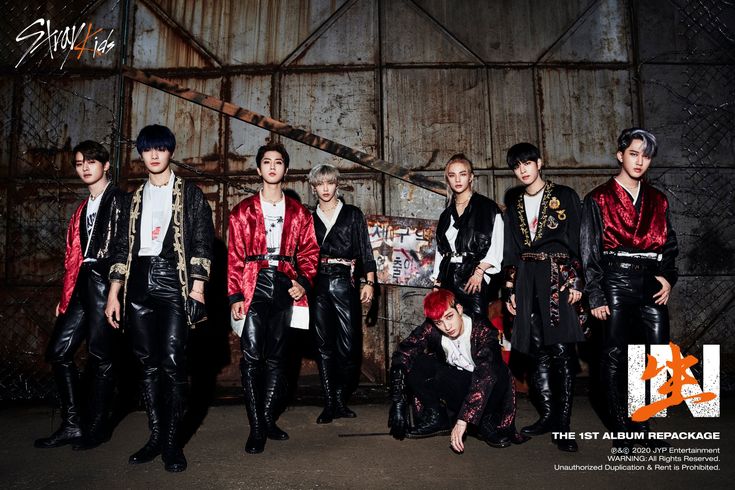
Industrial Chaos: Stray Kids’ Visual Identity
Stray Kids build a visual world forged from steel, noise, and kinetic force. Their aesthetic rejects polish in favor of rawness — a deliberate embrace of chaos as identity. Through industrial settings, glitch motifs, and choreography that hits like machinery, Stray Kids craft a visual language that is loud, confrontational, and unmistakably their own.
Color Logic & Atmosphere
Stray Kids’ palette is aggressively simple: blood‑red, industrial black, metallic grey. Red heightens urgency and adrenaline, black grounds the chaos, and metallic greys echo machinery and pressure. Color becomes directive, shaping the viewer’s emotional response before the music even begins.

Motifs & Symbol Systems
Stray Kids’ visuals rely on recurring motifs that reinforce their identity as self‑made and self‑constructed. These symbols form a world where the members are both the workers and the machinery, constantly building and breaking themselves.
- Steel beams & warehouses — pressure, endurance, grit
- Glitch overlays — fractured identity, digital overload
- Masks & obscured faces — anonymity vs. individuality
- Red spotlights — interrogation, intensity, exposure
Choreography as Visual Language
Stray Kids’ choreography is architectural — sharp, angular, and relentlessly rhythmic. Movements mimic mechanical repetition and explosive impact, turning the members into extensions of the industrial environment. Camera work reinforces this with tight tracking, rapid cuts, and impact‑based motion.
Narrative & Emotional Arc
Where many K‑pop groups smooth chaos into harmony, Stray Kids amplify it. Their visual storytelling embraces distortion, asymmetry, and emotional volatility. Noise becomes a form of authenticity — a refusal to conform to the genre’s traditional polish.
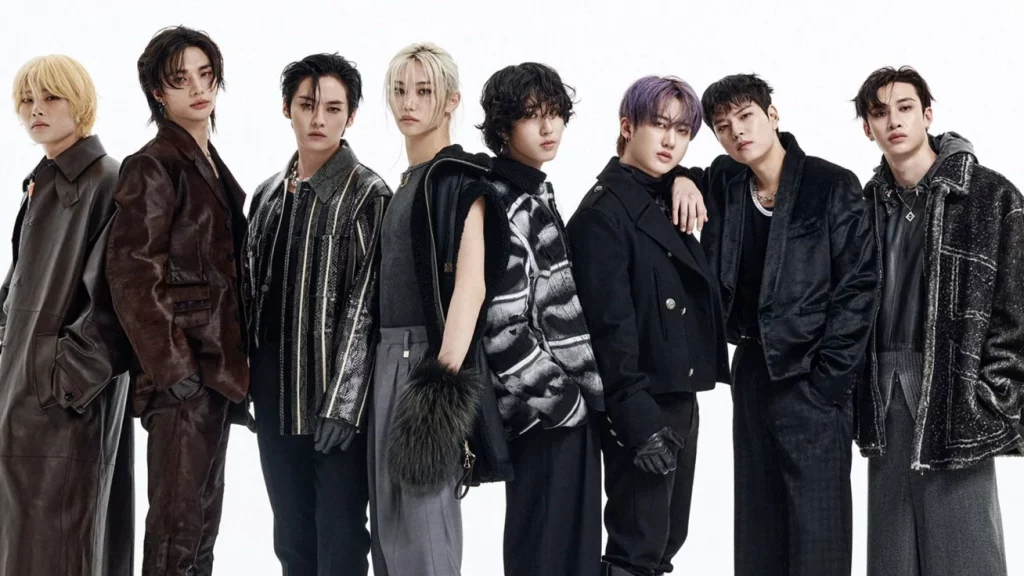
Contrast
Even in their harshest visuals, Stray Kids allow moments of vulnerability — the fracture where light enters.
Closing Insight
Stray Kids redefine K‑pop’s visual landscape by centering imperfection, noise, and emotional extremity. Their industrial aesthetic is not a costume but a worldview — one that values rawness over refinement, impact over symmetry, and authenticity over polish.